
Every Bit Counts! Old bread and pastry week at the fermentary.
Stale rye bread kvass, old bread miso, burnt toast garum, hot cross bun miso

Bread & Pastry Week started with a simple idea: stale is not a food category. It’s a story we tell ourselves when we no longer know what to do with an ingredient.
Throughout history, bread never had a single life.
Fresh bread was for today. Tomorrow’s loaf became soup, kvass, breadcrumbs, porridge, stuffing, sauces and ferments. The crusts became drinks. The crumbs became seasoning. Nothing was wasted because bread was too valuable.
This week at the fermentary we worked with some of the most overlooked “waste” foods: stale sourdough heels, slightly burnt toast, leftover Easter hot cross buns and bakery bread that could no longer be sold.
Four recipes. Four completely different foods.
– Stale rye bread kvass
– Old sourdough miso
– Hot cross bun miso
– Burnt toast garum
And all of them started from bread someone would have thrown away.
Stale Rye Bread Kvass
(works with any sourdough bread)
Makes approximately 2L
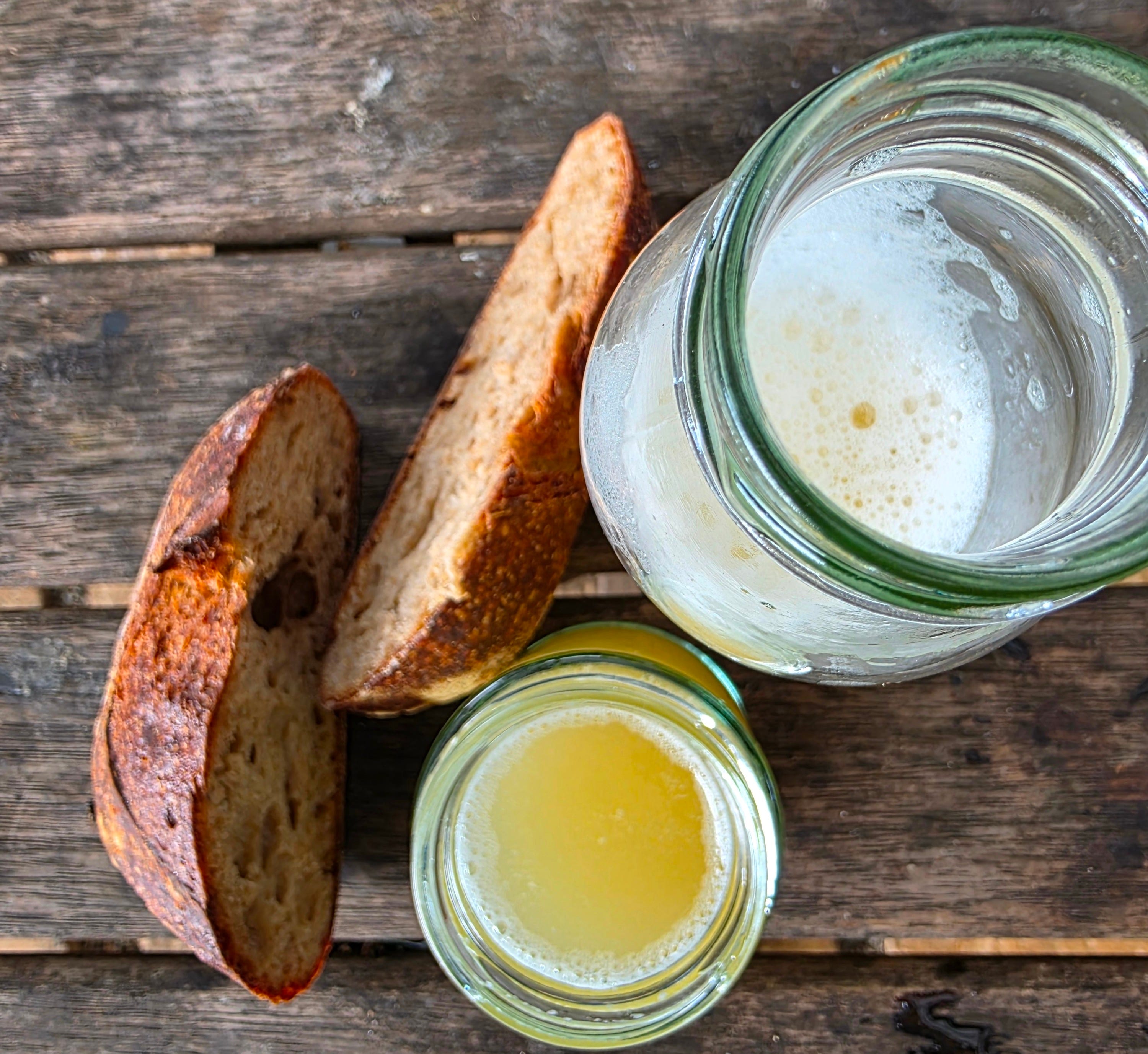
Ingredients
Stale rye sourdough heels (or any stale sourdough bread)
2L water
4 tbsp raw sugar
Optional: handful of raisins or chopped dates
Optional: strip of orange zest
Method
Tear or chop the stale bread into pieces and place into a clean fermentation jar.
Add sugar, optional raisins/dates and orange zest.
Pour over 2L water and mix well.
Close the lid loosely and leave to ferment for 3–5 days, depending on ambient temperature.
Leave a few centimetres of headspace as sourdough carries plenty of wild yeasts and can become active quickly.
Once bubbling begins, burp daily.
Taste from day 3 onwards.
Your kvass is ready when:
sweetness has mostly disappeared
it tastes gently tangy
it develops a light natural fizz
aroma is fresh, malty and bready rather than alcoholic
Mine took 5 days.
The final flavour was lightly sour, deeply malty and incredibly nostalgic — the same drink I hated as a child and now make every year.
Zero-waste note
Do not throw away the fermented bread solids.
Dry them in a dehydrator or oven on very low heat until completely dry. Make panzanella salad or ribollata soup.
Because even after the kvass is finished, the bread still has another life.
Old Sourdough Miso
This recipe was one of the biggest surprises of the week.
Bread already feels like a finished product. It has been milled, kneaded, fermented, baked. Yet when paired with koji, it becomes a fermentation substrate all over again.
The result is a deeply savoury miso with notes of toasted grain, dark caramel and malt.
Mine was incubated and developed into a rich chocolate-coloured paste that reminded me of burnt caramel. It became one of my favourite misos so far.
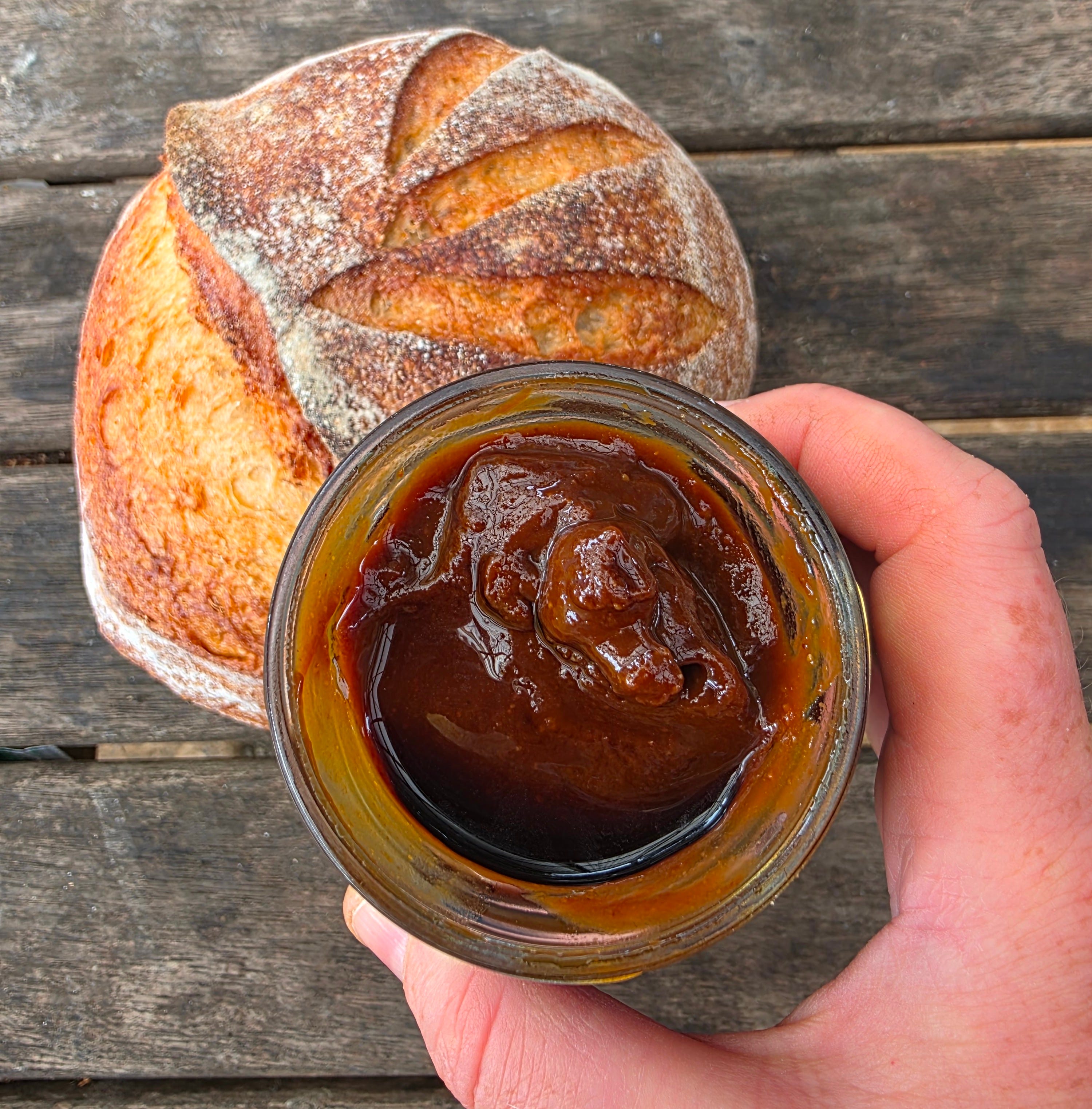
And if you don’t have koji yet, I teach exactly how to make it inside my Basics of Koji Fermentation course.
Ingredients
Old sourdough bread (stale, dry bread and heels work beautifully)
Koji rice — same weight as bread after rehydration
Fine sea salt
Small amount of warm water for rehydration
