
The Rejects.
What second-grade fruit reveals about the hidden food waste happening long before food reaches our homes.

We drove to Armidale, New England looking for mushrooms and came home with 50 kilos of pears instead.
For the first time in seven years, I walked through the forest without finding a single mushroom. The soil felt dry beneath my feet. The air felt different too — still, brittle, exhausted. You could feel the drought everywhere. Trees looked stressed. The forest floor, usually alive with fungi this time of year, felt strangely silent.
It is becoming harder to ignore how quickly ecosystems are changing.
On the drive back, we stopped at Green Hill Orchards and bought 50 kilos of second-grade pears directly from the farmer. Nashi pears — my absolute favourite and increasingly difficult to find properly ripe — along with Red D’Anjou, Winter Cole, and Packham varieties.
And honestly, they were stunning.
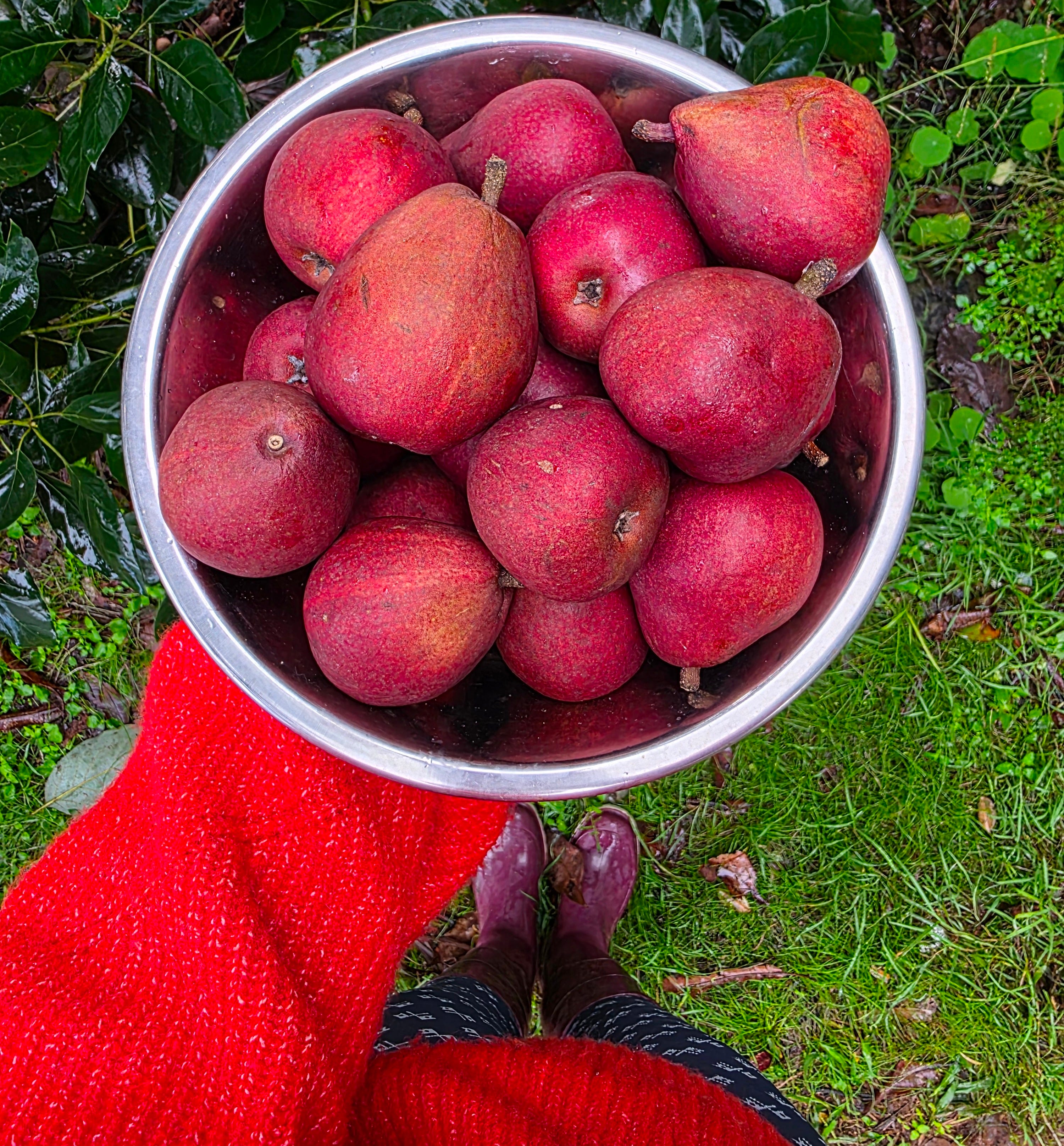
Just imperfect in the eyes of the system.
Some had blemishes.
Some had marks on their skin.
Some were oddly shaped.
Some too soft.
Some simply not uniform enough for supermarket shelves.
The kind of fruit most people never even get the chance to see.
We often talk about food waste as something happening in our homes — forgotten pumpkin in the fridge, leftovers, stale bread. But a huge amount of food waste happens long before food ever reaches our kitchens.
Perfectly edible fruit gets rejected every day because it does not meet cosmetic standards designed for transport, storage, and visual uniformity.
And standing there surrounded by boxes of beautiful pears during a cost-of-living crisis felt surreal.
Farmers are struggling.
The land is dry.
Food prices are rising.
And yet perfectly good food quietly disappears from the system every single day.
The strange thing is that for fermentation, these pears are not second-grade at all.
In many ways, they are perfect.
Softer fruit ferments beautifully.
Riper pears contain more sugar.
Bruised fruit can become miso and amazake.
Cores can become kvass.
The rest can become kimchi, carbonation, acidity, complexity.
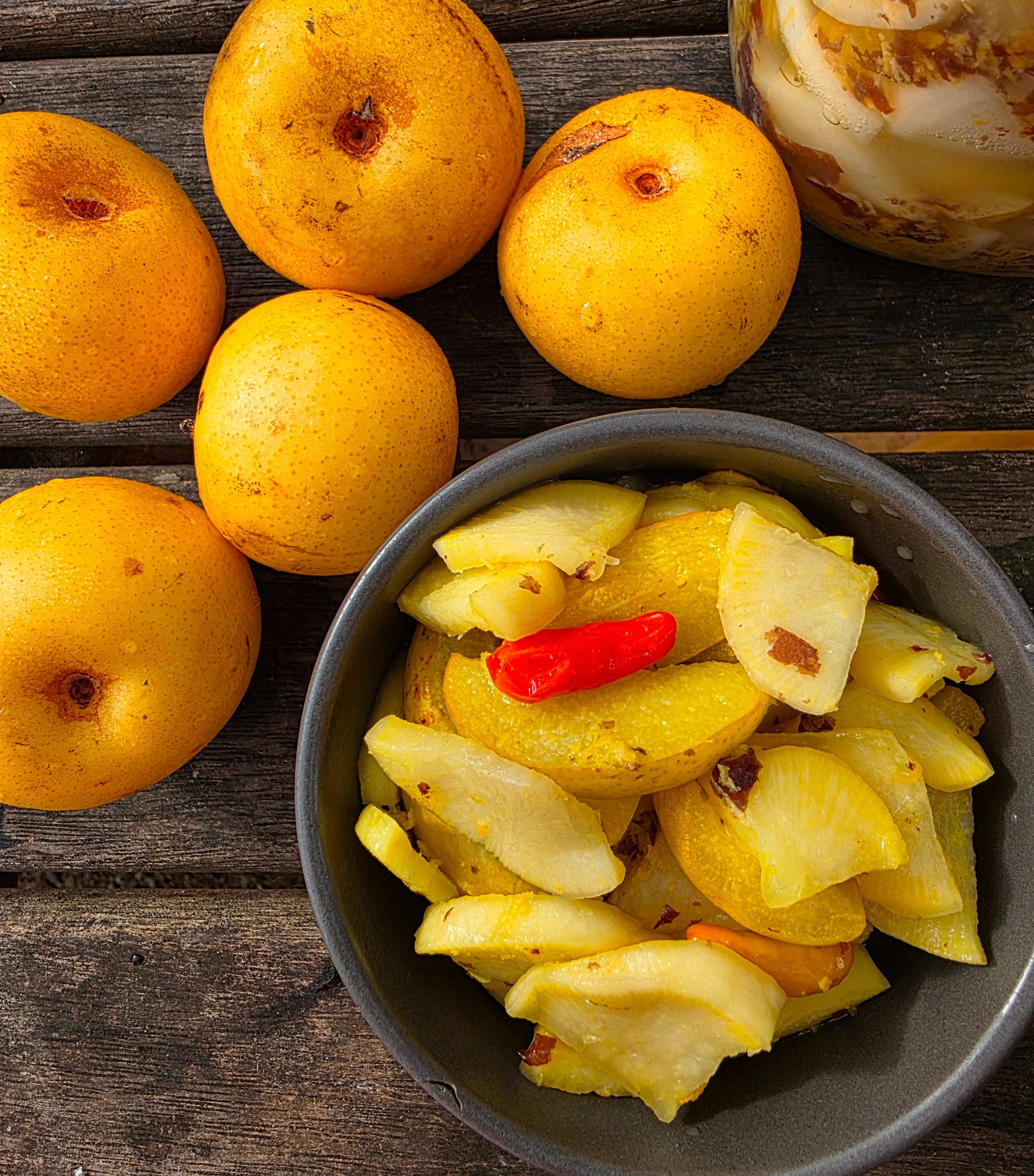
Fermentation does not ask fruit to be beautiful.
It asks it to be alive.
This is something I keep thinking about more and more lately:
modern food systems are built around perfection, uniformity, and shelf life, while fermentation is built around transformation.
Supermarkets reject softness.
Fermentation embraces it.
Industrial systems prioritise appearance.
Microbial systems prioritise life.
And maybe that is why fermentation feels so important right now.
Not as a trend.
Not as a gourmet hobby.
But as a genuine response to waste, instability, and disconnection from food systems.
My mission has never simply been to teach recipes.
It is to teach systems.
Systems where local waste becomes local nourishment.
Systems where orchards, restaurants, farms, and markets can work together with local fermenters instead of sending surplus food to landfill.
I keep imagining a future where every town has small local fermentation spaces attached to farms, community gardens, restaurants, and orchards.
Places where second-grade fruit becomes kvass, miso, kimchi, garums, and probiotic drinks.
Places where abundance stays within the community instead of turning into a methane.
Places where fermentation helps rebuild local food culture while nourishing people’s guts at the same time.
Because fermentation does something extraordinary:
it transforms what modern systems consider “waste” into something more valuable than the original ingredient.
The pears we brought home this week will become multiple ferments.
The cores will become pear kvass.
Bruised pears will become miso.
Firmer will go into kimchi. Softer ones will become amazake.
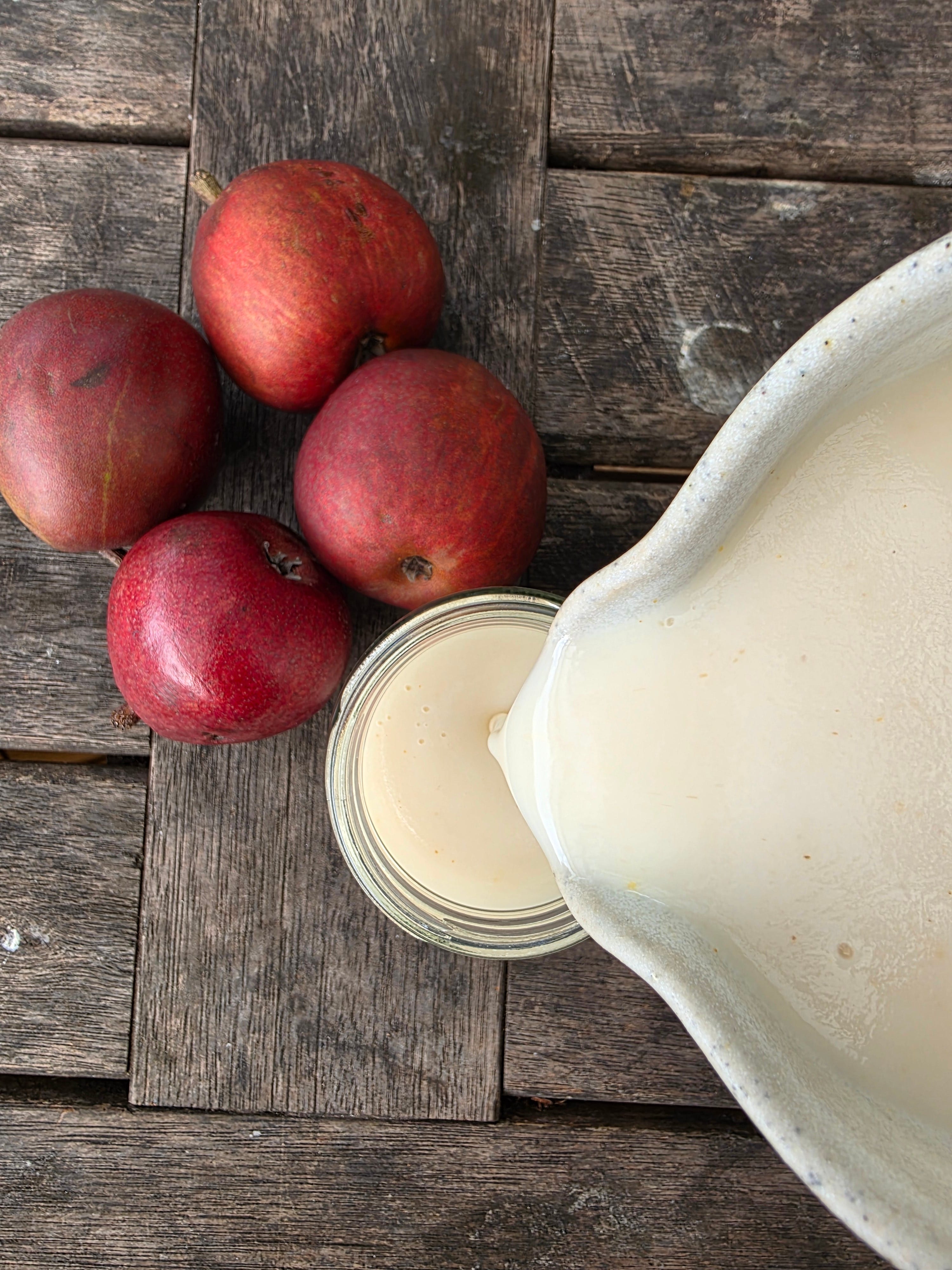
And every part will be used.
Not because I am trying to be virtuous.
But because after years of fermenting this way, it becomes impossible not to see how much perfectly good food is slipping through the cracks of the system.
Maybe the answer is not producing more food.
Maybe it is finally learning how to value what is already here.
Fizzy regards,
Katerina
P.S. — If you’re already on the free list, Monday’s Every Bit Counts! post is what to upgrade for. All recipes from the week — nashi pear kimchi, pear core kvass, roasted pear miso and amazake— with full method, in one place.